Showing posts with label Down Syndrome. Show all posts

Friday, 4 November 2016

Despair


Once I had a voice. And I screamed.

NOW

I have no more time to myself.

Idepend on the help I shall, may or might get - or not.

My life is now fully busy with The Girls.

Elder Girl is unmanageable because of her pathologies and because she hates me as I ask her to do things she does not want to do. The Younger follows the example of The Elder.

We have no hours.

They claimed for breakfast at eight this morning and went back to sleep in my arms until half past twelve. I was lucky they remembered they already had their breakfast otherwise we would have taken another one. I washed and dressed The Elder. I supervised and helped The Younger. I cooked their lunch. I made the beds while they were having lunch. I wrote the shopping list. I drank a protein liquid, and tried to e-mail the finance advisor and the Head of the Agency in order to have a planning for November. I was interrupted many times and yet nobody was ready when the Shopping Lady arrived.


No shopping for me as I had no time to wash and dress ... and eat. I am feeling like collapsing every time I move.


I tried to find a book in a card box but the box almost all fell down on my foot that is now swollen and blue, and I have no idea where the book is but a good idea where there is a spider nest.


I wish The Girls were elsewhere but far away from me. I wish I were in my own life with my own things, my own flat, my own friends, music, museums, conferences, exhibitions, books, studies - my life.


I wish I had new books - I mean books I would have never read: dove grey Persephones, green (or not) Viragos, yellow Grey Ladies, those wonderful although never seen Golden Age Mystery books from the British Library, the Fox books and magazines, Mrs Thirkell (those I have not...).


I even wish I had Margery Sharp, Ms Hocking, and all these undervalued women writers, and Daphne Du Maurier (for whom my foot is swollen).


And I wish I had a great, good, strong bottle of whisky or other alcool, and get drunk.


I am told I must assume the consequences of my former decisions and stop crying over myself (and spilt milk).


NOW

I have no voice any more.


Monday, 31 October 2016

In need of a word of comfort


I have started writing about what happened to The Little Family during the last month but I cannot end the post. Feelings are too raw and I am overtired.

Elder Girl had to be dashed to hospital after a fit where she convulsed and badly hurt her head and scalp. She had a scan, an electro-encephalogram, various tests, was examined by various doctors and a neurologist, and diagnosed epileptic, which is often the case when DownS persons are ageing and heading towards the end of their lives.

I shall not write about life at home. I shall do this another time. Later. Life is difficult, bleak. I do not know how to cope. I do not have the means to cope and help is distilled drop after drop when I shriek for it.

I am tired of advice from people who do not know what I am going through and what The Girls are going through. Fortunately, I have a few kind friends on Facebook who have helped me go through last week ordeal. Others are only living in their own intellectual sphere without understand.

If you read this, would you please be kind enough to wave, say hello, show that  you are here. No more. I feel alone and lonely. I try to be brave but I am NOT brave at all. I am frightened.

Thank you.

Monday, 3 October 2016

Some news from The Little Family


It has been a long time since I posted my last words on all my blogs. I think the middle of July is the last date for "Sketches and Vignettes from la Dordogne", when I talked about a play at the Avignon theatre festival. And it was even sooner than this for "Lights and Shades".
I have not left off blogging. I simply had no time. I have not much time left for blogging, writing, reading, or for myself.
Elder Girl has turned 57 on the 21st of July. I know that when she was born, and later still, she was not expected to live so long. Now, people suffering from Down Syndrome have a life expectancy of an average of 60 years. When she was born, it was at best 30 years. Therefore she has surprised everybody by outliving the supposed limit of her life. Congratulations must be addressed to her parents who took care of her when she was a baby, a child and a young lady. She had breathing difficulties that were remedied to. She overcame all childish illnesses. She was made, and kept, fit. She was attended to. She was taught to drink, eat, stand upright, walk, move, read, write, count. She was given friends. She was given social relationships. She was taught a job, helping to take care of little children in a kindergarten. She has had a full life - as much as her family was able to give her and as much as she could take in.
The counterpart was all the sacrifices that were made for her. Her patents gave most of their lives to her and for her and her well-being. They both died of cancer but mostly of exhaustion from having supported her as they did. Collateral consequences were then for those who have had to support her until now.
But she has been a grand lady.
Shortly after her birthday, I was awoken by a thud on the floor of her bedroom. It had already happened that she slid from an unperfectly made bed while having a nightmare. So, I was not that surprised. However, I was not prepared for what was waiting for me. She was lying on the floor, convulsing, thrashing legs and arms, eyes rolling, scum around the mouth and tongue protruding. I briefly thought of Mother dying in my arms almost the same way, and remembered as a reflex more than as a real thought what was advised for epilepsy crises. I cannot remember how long it lasted. It seemed hours but it was certainly more a matter of minutes. Then, I put her back to bed, and rang up the doctor. 
To be qualified as epilepsy, there should be other crises. There have been none. But some days, there are small electric jolts that last a fraction of second. After each she does not remember what she was saying and doing. There have been fainting fits - one of which was vicious as she banged her head on the corner of a shelf and cut her scalp. She now forgets things: she forgets the time, she forgets what she reads, she forgets to read, she forgets the days, she forgets words. She plays endlessly with her blue pencils - blue only - and never goes anywhere without less than three or four of them in her hand. She lives according a sequence of events whatever the hour. Therefore she woke up one day at two pm, took half an hour to be ready to get up, then had breakfast, wished she had her time for hugging, took her shower, got prepared and clothed, was ready by five o'clock, did not want to listen to her radio programme as in her mind it was not the proper time, but was infinitely surprised that we had no lunch and were closing the shutters when night came. She did not understand it was dinner time, TV time and bed time. She thought she was somewhat cheated of her day.
She forgets where she is and asks to come home, hears her mother, arrived one day saying "Mother is back", took me once for her mother's sister (one of her aunts), does not remember where things are in the house, gets glassy eyes, falls asleep in front of TV, sleeps a lot, cannot go up some stair steps. And I might go on and on.
Getting an appointment for a cerebral scanner test and an appointment on the same day with a neurologist at the nearest hospital in Périgueux is a "tour de force". Considering that she is not a productive person but one suffering from a mental handicap, receiving a State allowance, and being 57, our Western Liberal society is not very much interested in her. She does not produce anything and she does not consume much. What is the point of keeping her living? So tests and appointments are forever pushed back in time. There are more "important" people to see to before her.
Life at home revolves around her now and we live at her own pace. Not much time to read. No time to write or blog.

Anyway, I would be glad if you ever had experiences like mine of any advice you could give and share. Many thanks for your support and help.


Friday, 1 July 2016

Diary (9) – Please, help!


Résultat de recherche d'images pour "trisomie 21"
" I have Down Syndrome... What then?


Dear friends and readers,
Positive things first.
Your reading and writing comments or a "like" was a surprise for Dr Quack and the local Red Tape. As a consequence, a gardener has come twice and spent five hours and a half in the garden, pruning the demented wisteria, several offshoots of cherry trees, walnut trees, oak trees, making big piles of branches, and cutting part of the grass. A cleaning party is now decided for the 21 July - the whole day with three or four ladies and the gardener to move furniture and book boxes around.
Why is that the consequence of your action, will you ask? Because it is the first time they all here encounter an international public mobilization. You have a weight.
Thank you. 
Thank you for your advice as well.
And where is The Little Family?
Anne-Fleur is sick at night. She is still scared to be torn from me. She stressed and strained. Every night she wakes up and is sick before she reaches the loo. She goes under the shower. I clean her. I clean the floor. I put her back to bed. I hug her. I rock her. I try to send her back to sleep, telling her that things will be well.
As to me, after asking various French organisations reputed to help handicapped persons and their families, I am back where I started.
No one has been able to tell me if "carers" existed in France. If they exist, which seems more and more dubious, do they receive a remuneration? This seems even more dubious. Should I have a "compensation" for taking care of Anne-Fleur? Who knows? No one. Each organisation tells me to ask the other. And they send me back where I started.
Meanwhile, I know now - and this was something that I was not intended to know: the person who said it was sorry to have done so -, I know that The Shopping Lady is paid €20,80 per hour to go shopping with Anne-Fleur. And she has told me she does not like it. 
If I do a quick calculation, what might I earn? €20 x 8 hours (I will not count the night hours and the meal hours and part of the "being together" hours; I make it an ordinary working day). That makes €160. Shall I make a monthly estimate, taking out the weekends? Let's say I work 20 days a month: €160 x 20 = €3.200. 
This is not bad. Even with half the amount, I would be happy!
But this is a dream.
Even for my lawyer, this is no legal issue.
As to my being declared mentally handicapped, this something that is never ever talked about. Never ever mentioned. Therefore, it is never said whether Anne-Fleur would remain with me or not. 
It seems that the handicapped persons like Anne-Fleur are dealt with by our society when they are children. Then, when they become legally adults (in France, when they are 18), they are declared mentally handicapped, given an allowance, put under guardianship, and, most of the time, steered towards a job, staying with their parents while these are able to take care of them. When the mentally handicapped person grows old, she quits her job and her aged parents (or these die), and she is steered again towards a paid family who will take her on board, or towards a specialised institution until his/her death. There seems to be no one from the family after the parents. Brotherly or sisterly care? A void.
What am I to do? 
I will need you again. Please, show that you read this blog. Please, tweet it. Please, re-blog it. Please, put it on Facebook. Please, make it known on the social media. I do not want to lose Anne-Fleur and Anne-Fleur does not want to leave me. We want to stay "The Little Family". So, please, SHOW YOU CARE. You may make the difference when I write to our MP, to the minister in charge of handicapped persons, and to the media.
Compared with the Brexit, with the wars, with the refugees, with elections, with democracy, with all the noise and the rush of the world, we are a wisp of straw, a mere nothing. However, the world, the countries, the nations, democracy - all this is made of wisps of straw, of mere nothings.
Please, help!


Thursday, 23 June 2016

Diary (8) - Anne-Fleur's tears


Tuesday was the first warm summer day of the year. Yesterday was better - or worse: it depends how you like your temperature. Around 2 pm, it was flirting with 35° C. There is no air conditioning at home but good isolation and a subtle play with the opening and shutting of shutters and windows, according to moments of the day and the course of the sun. 
This causes problems to The Girls: they do not know how to play the game and will stay in outstanding heat without closing their shutters and windows, without thinking of the water spray and the water bottle I gave them each, and being long in understanding that they must quit their winter clothes for summer ones. On Tuesday Anne-Fleur insisted on going shopping with jeans and a polo shirt, high socks and winter shoes. I could not make her change into something lighter. Yesterday, she stayed barefoot in her winter slippers, still with the jeans and the polo shirt. Today, I have convinced her at long last that she could put on a bermuda, a T-shirt, and be barefoot in summer canvas shoes. But she clings to her winter nightshirt and bedclothes. I guess she will allow me to change them towards the end of the week. Meanwhile, I have to be cautious and regularly oversee that she is well hydrated.
Add this intolerance to high temperatures and heat to my current worries and you will easily understand that my temper is frayed. I am stressed and strained. I am exhausted. I try to stay quiet and calm, to understand what is not understandable and not logic, to listen to what The Girls have to say, to be as "normal" as possible.
But people with Down Syndrome have an extraordinary sensitivity. And antennae.
Therefore it did not take long for Anne-Fleur to feel that something was wrong and that I was not "normal".
***
The immediate reaction is fear. The deaths she has lived through have not frightened her and I have wondered why for a long time, until, after long circumvention, I understood that she had thought(?) / felt(?) that she would not be left alone but will always stay with her family. Nowadays, she knows (and I am sure it is a knowledge) that I am her only family. After me stands the unknown: a paid family that would take care of her? An institution? In any case, a place where she would not know anyone, where she would not have her furniture, her books, her CDs, her radio set, her routine, her life.
Is this so different from what I feel? In honest truth, no. I would not like to be transferred to the house of totally unknown people or to an institution where I would live at the same pace as a whole community. Proof is that I bear with lots of difficulties the fact that I have lost my life-from-before and dislike The Village life all year round. I dislike not having my furniture, my crockery, books, CDs and DVDs left in Paris. I am uncomfortable living at the pace of The Girls and not my own.
How would it be with you?
When she is afraid, Anne-Fleur is still rather rational. But when she gets frightened or scared, she loses her wits. These days, she is out-of-wits.
She does not know where are her room, the bathroom, the loo, the kitchen. I find her lost in the middle of the corridor wondering where she is going and where which room is. She does not know anymore how to set the table. She will give me no cutlery and no glass but keep the whole on her table mat. She does not talk. When she does, she stutters, loses her thread, begins a sentence, stops short after three words and cannot remember what she wanted to say. She has almost forgotten what she learnt in Paris. She does not know the day, the date. From one second to another she does not remember what she was looking for. She stands with a glassy stare in front of the TV set, gets lost, starts to nod. I watch, frightened that she would slide down on the floor. Sometimes, she forgets how to eat bread, meat and vegetable together and starts eating her bread alone. 
She regresses.
Two, three, four times a day, she starts to cry and comes to me, puts her arms around my neck and sobs: "I don't want to leave you". 
***
Anne-Fleur is between 1m35 and 1m40. She is thickset, some would say (and have said tactlessly to her face) big. She has brown short hair (short when I have implored the finance administrator to give me some more money to take her to the hairdresser's), hazelnut slanted eyes that can be "bright, light and sparkling" like those of Elizabeth Bennet, a high forehead with a light fringe - and she puts her forehead against mine saying "we are like deer" -, a nose that turns up at the end, and thin pink lips. Her hands are like little starfishes, warm in mine, cut in two by a line in the palms. She loves to sing and sings flat, is almost tone deaf. She smiles a lot. She laughs. A few things, she learns quickly, like art history or geography; others, she will never understand, like money. She loves some people and dislikes others. She likes long, big hugs. She is stubborn. She is irritating. She is lovable. She is a child. She is an adult. She is complex.
She is a human being. Like you and me.
Is it right to put a human being in a slot and, according to this slot, when labelled "mentally handicapped / Down Syndrome", to move him or her around without asking his or her opinion?
Because this is what will happen if I am labelled "mentally handicapped" myself. Beyond what will happen to me, there will be what will happen to The Little Family, to Anne-Fleur. And this is about these facts that she is scared, and regresses, and cries.
Wouldn't it be more just and right to give me, her carer, a status as such, than to put me in the already existing "mentally handicapped" box - which would be a fraud -?
Why not, then?
Because it might cost more money?
What is the price of Anne-Fleur's happiness?
What is the price of a human being?

Monday, 20 June 2016

Diary (7) - Mentally handicapped, mentally disabled, different


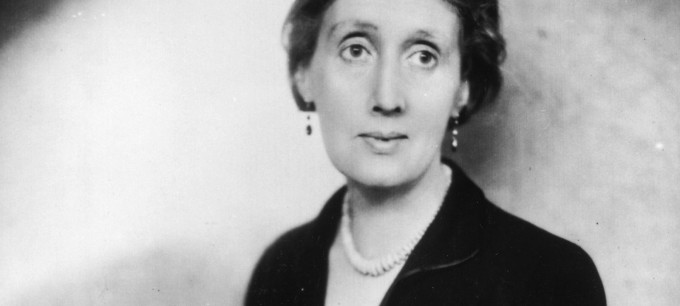
Virginia Woolf
circa 1933: English critic, novelist and essayist Virginia Woolf (1882 - 1941). (Photo by Central Press/Getty Images)

I was ten when I first met Virginia Woolf. I was something like ten and a half when I met Marcel Proust. These two meetings were to be decisive for my future life.
Of course, they were not in-person meetings. I may have already told you about them, but I need to remember them clearly today to help me go on in life.
***
I met Virginia Woolf when she was going "To the Lighthouse" and while I was in bed with the flu. It was winter. There was a bleary light in my room. I was half asleep and half awake, creating characters from the gathers of the trim cretonne. I could see noses, forefronts, eyes - all from the rays and flowers, small tight rosebuds, of the material and the plaster of the ceiling or the white light over the polished floor. It was a pleasant half-floating state, half between sleep and wakefulness, between consciousness and fever.
I had told Mother I had nothing to read anymore, and she came back from outside - a visit? - carrying a flaming book, all reds and oranges, with the black silhouette of a lighthouse and of a small boat going towards it. "Going to the Lighthouse" - Virginia Woolf.
It was a curious choice for a little girl being ill. However my parents always had curious choices. I dipped into the book as one dips a toe into the sea and I was hooked. I did not understand the story or even the sentences. I understood the words separately. I was rocked by the sentences. I was entranced by the mother, Mrs Ramsay, and I was charmed by the painter, Lily Briscoe. I was pleasantly rocked to sleep, rocked in my sleep, rocked in dull ache and semi-unconsciousness. I was happy, in a daze, losing track of hot water bottles, drinks, and meals. The characters in the flounces of the cretonne were those of the novel. It was an entirely new experience bordering unconsciousness or this drugged state when one is overwhelmed by fever and apprehends the world as something blurred, distorted, but all together far and pleasant.
When I awoke from that state and began to recover, I asked for my usual books and left Virginia Woolf for more congenial companions. Nonetheless, I did not forget her. I looked her up in the dictionary and asked Mother about her. 
I gathered that she was dead, that she was one of the greatest writers of the twentieth century - and others -, that she came from an intellectual and artistic family, and that she had been ill all her life, suffering from either mental illness or acute depression, and that in the end, she would not bear it anymore and had committed suicide in 1941, in the River Ouse. Mother doubted I would understand her novels but she was allowing me to read them if I wished.
Thus began my story of love/repulsion with Virginia Woolf.
***
I met Proust in the kitchen, in the dark corner between the purring refrigerator and the pantry cupboard where the most useless articles were kept. There was a hardback wooden chair there, without arms and without cushions. I used to perch myself on the seat with my feet on the middle rung and pretend I was an owl.
There was an intense discussion around me, involving Father and craftsmen from the village, about a new washing machine. They were surveying the room and meeting regularly at the centre, around the big table. I was unnoticed and diving with delight in "Du Côté de chez Swann". Proust and his family were walking on the road and he was watching Gilberte and hawthorn flowers.
Not very long ago, I told you about Mother's love for simple flowers and among them hawthorn flowers. Therefore, I perfectly understood that one might be absorbed in their contemplation. What I did not understand was the subtle difference between the child who was absorbed in the flowers, the Narrator, and the real Marcel Proust who was all three and neither.
The description of the hawthorn flowers as a group and that of a unique flower were stunning. I was dizzy before so much beauty, so many nuances of white and pink, so detailed petals, such powdery stamens, such complex little leaves. And the whole mass of them was like a wall, a veil, compact and evanescent, strong in its full blooming life and still promises to come, and fragile as to the duration of this life. 
I remember leaving my perch on the chair, brush against the walls not willing to be seen, and going out in the courtyard, blinking from so much light after my dark corner, dazzled by the sun of which I was feeling the warmth on my arms and my naked and grazed legs, lost in the sudden violence of colours, looking for a path where I had seen Mother adjusting a wild branch of hawthorn the evening before. There was the untidy bush in the full splendour of new May, with the wild untidy splendour of the meadow on the other side of the thorny hedge. For the first time I was watching herbs, grass, flowers, branches. I felt intoxicated and happy as I had been with the characters and the landscapes of the Lighthouse. This was my world. This was the world.
I heard Father's step beside me and I turned to explain and share my exhilaration and exaltation. There was no mocking, no smiling, no laughing. He was glad I had discovered another door to this world that was precious and essential to live and to survive, as he had explained two or three years ago when he had had me visit a concentration camp. He hoped I would live the same while watching paintings and listening to music, or playing music, or singing - as it painting myself was rather a lost cause, wasn't it, Squirrel? And he smiled.
Did I know about Proust? When he was writing this hymn to nature, he was confined in his cork-lined room, suffering from asthma, neurotic, going out only when it was night, a little queer. Was he like Virginia Woolf, I asked, remembering the tall, angular lady of whom Mother had talked with such reverence. Father said, they had lived at the same time, had never met, and were different. Yet, they had both made a revolution in literature, a revolution with their thoughts, with the words, the grammar, the vocabulary, the style. That was what I was experimenting now, probably as I had experimented it when I had read "To the Lighthouse".
But was he depressed or mentally ill? He was ... different. Some might have thought he was neurasthenic. Or not "normal". But what was being "normal"? Was it to follow the others and do the things they did, think the thoughts they thought? Father was wishing that I would never be "un mouton de Panurge", and, at the risk of seeming abnormal and weird, would think my own thoughts, follow my own path and live my own life as best as I could. The norm was defined by the greatest number, which did not mean it was just and right. Were I to be absorbed in literature, the arts and music, I would certainly be deemed bizarre. I would also have times of feeling that I was losing touch with "reality", times of great sadness and of great joy. But at least, I would live.
Thus began the story of my fear of being different and not different.
***
I need to say this today, once more perhaps. I need to hear Mother speaking of Woolf and Father of Proust. I need to re-assert my belief that Woolf and Proust were different, that they suffered but created, that they give a sparkle of life to their readers. And that I am one of these readers. I have received this sparkle of life - a tiny one - that makes me weird and bizarre in The Village, towards the Bureaucracy.
All right. They may need to put me in the box "mentally disabled" or "mentally handicapped". But I have to be persuaded that I am not. That I have been depressed but have come back from this inferno again, and again. That I am well. That I am different and not different.
Boxes are useful: they are pens for the moutons de Panurge, which I am not. This might be disturbing for Dr Quack, the "socialising lady" and the social workers. What do I care? I am free to accept or to refuse the box. If it is dangerous for The Girls - and for me, as I do exist myself -, we shall manage differently. There must be a way to care with intelligence. 
For now and forever, give me Woolf and Proust and all the others.
And let me live my life.
Different.

AVT_Marcel-Proust_2054

Thursday, 16 June 2016

Diary (6) - The possibly mentally handicapped carer proceeds to think (and needs help in the process)


I must admit that I felt degraded and humiliated when it was suggested that I ask to be recognised as mentally handicapped. That was my first thought of hurt pride. Alright, it was misplaced: I am no genius; I have an average intelligence and understanding, no more. Nonetheless, the fact that I already feel I have been robbed of my life - I mean a normal life in a place I chose, doing things I chose, having friends, hobbies, a job, my own possessions - trivial things like my own crockery, my own books, my own records -, a financial independence - all this is difficult. I try to live it as a Christian: giving one's life for others without restriction and with love. I can tell you I am a bad Christian because this does not come easily to me!
Therefore, being deprived of full intellectual means "for the good cause" seemed to me a little over the top.
Dr Quack left, thinking I would rush to do what he had told me. He insisted that it could be easily proven that I suffer from chronic nervous breakdown verging on melancholia. He would write it. He would convince his colleagues on the Red Tape board or panel. I would not be deprived of my civic rights and my own disposition of my money and properties. I would manage my life as I would please. I would be given help that would help The Little Family. I would be given a status of "mentally handicapped" or "mentally disabled" that entailed a small allowance. All I had to do was to see a social worker who would ask for the file to be sent from the local bureaucracy for disabled and handicapped people (the same who has declared Anne-Fleur mentally handicapped) fill the papers, give them to him, to add his certificate about my mental disease, and to send the whole to the same office in Périgueux. Then, there would be some months before I would be called before a panel of administration (read intellectually limited and bureaucratic MDs) who would corroborate the decision. Then again, some more months with social workers to determine the amount of my allowance (not much - somewhere about 200 or 300€ per month) and the material help that I would need. 
Verba volant, scripta manent. Who can guarantee and sign the warrant? Who can guarantee that things will evolve like this? Can Dr Quack do it? I don't believe so.
The material needs are in the hands of the bureaucratic psychologists and social workers. They may very well decide that being mentally handicapped does not forbid my doing the whole house cleaning, cooking and gardening. These may well be seen as therapies. 
So what would I earn? A small financial allowance and a status of a mentally handicapped or mentally disabled person. The rest is a full question mark. The answer, if I adopt this solution, will be found in a year or so.
Meanwhile, we still have to live.
A blogger friend picked up another hole in the seemingly perfect fabric. And my thoughts had already jumped to it, after my pride had started to abate.
If I am declared mentally handicapped, or mentally disabled with the relevant status, I stop being the person with which The Girls can live without danger. One further step may easily be made by the Court, or by the social services, or by the administrator: The Girls would be better with "normal people", neither handicapped nor disabled, and be entrusted to a family paid to take care of them or to a specialised institution.
One more step and I could be deemed unable to live by myself and sent to a specialised institution myself.
Doesn't it need thought before rushing to issue that was so temptingly presented to me yesterday? Perhaps a consultation of our legal advisor in Paris, specialised in all things relevant to handicap and disability? To friends having jobs dealing with same social law? With social workers of the Foreign Office and the ministry of defence where family members worked for years and years?
Other thoughts?
I still believe that giving the carer, when he or she is family, a status is the proper solution. We do the job. Why are we not paid and helped for it?
But the job is a matter for another post.


Wednesday, 15 June 2016

Diary (5) When an able person needs to be declared handicapped herself to receive help in order to help the person who truly needs it


New news from The Little Family and a new turn in our life.
Another paradox of "The Red Tape".
All the excitement around our situation has made me ill, and I called our GP earlier this afternoon. Once diagnosed with a stomach ulcer, we talked about our needs. 
It is agreed that the house needs the great cleaning about which we have been talking for months. Dr Quack was even surprised that it had not already been done. Out was his prescription pad and busy did he become plying his pen along the page, requiring a cleaning firm to be sent to do the scouring from basement to attic, and then the assurance that  a cleaning lady would come two hours a week to help me do the routine tidying. Out was his cell phone to ring up the finance administrator to discuss the situation and to release the necessary funds.
I asked for a package: house and garden, as growing grass is a constant preoccupation, everywhere in the garden and, especially, close to the house: little animals of the fields and meadows may find their way within our walls.
I underlined the necessity to have a car that I might drive to go where we need when we need, and in case of emergency - on behalf of Anne-Fleur and The whole Little Family.
The finance administrator was out of reach - in a meeting or not at her desk - but Dr Quack left a message asking her to ring him back. Undaunted, he told me that he would ring her back himself if he had no news very quickly.
In France, in cases such as Anne-Fleur's, a MD/GP reigns. His word overrules all words - in a limited way but it has a true weight.
And then came the solution to our situation.
A carer, like me, has no status in France. The only person who has a status is the handicapped person. Therefore, a carer has no help. The handicapped person gets help - such help pushing slightly aside the carer. So, in order for the carer to get help, he/she/ I must be declared handicapped. 
As soon as I am declared handicapped, I may receive the help of a cleaning lady, the car can be repaired without protest, the gardener may be operational (in theory), and I may receive a small allowance (less than Anne-Fleur) but an allowance.
But I must be declared handicapped.
As I have no physical problem, the suggestion is a mental handicap. 
I felt ... degraded, treated without respect. But mental handicap it should be. Without having a guardian or losing my civil rights, Dr Quack hastened to say. I may be declared inapt to work because of an acute nervous breakdown verging on melancholia. 
So, if you are in France, be a mentally handicapped carer and you may care about your sister suffering from Down Syndrome, with the "benefit" of a status and an allowance.
I am left to think about this but urged to make steps forward the achievement of the necessary preliminary steps in order for Doctor Quack to process as quickly as possible, for the well-being of the whole Little Family.
Now, do I sound mentally handicapped to you? Am I illogical in my wish for a proper status for carers or is The Red Tape logical?
My mind boggles and loses its marks in this maze of new concepts.


Tuesday, 14 June 2016

Diary (4) -Would please still help The Little Family? Thanks to you, we are half way (or so I hope) - Continued


After a week, an answer came from the finance administrator. It is a weird answer, embarrassed, attempting to scold me for a lack of care or a wrongly dispensed care, and at the same time relenting on most points.
First of all, a telephone must be put back, so that talks may be conducted by ringing up.
My answer is that verba volant, scripta manent. It will be nice and convenient to have a telephone at home but no conversation that might lead to litigation or even misunderstandings should be held verbally.
The car with the broken exhaust pipe should not be repaired with Anne-Fleur's money as it does not belong to her. But given the particular circumstances, with the agreement of the Court, if the agreement is given, then the car might be mended.
My answer is that Anne-Fleur will never own a car and that she will never drive. Nonetheless, she needs a car to be driven to the "socialising" functions upon which the French bureaucracy is so keen. There also needs to be a car at home in case of emergency, or to go shopping outside the hours of the "socialising/shopping lady.” A car is useful. And, of course, it is I, and not Anne-Fleur, who shall drive it. Being without allowance myself, it seems pure common sense to use her money to repair it.
The hours with the shopping lady are not for cleaning the house. The shopping lady is someone who should help Anne-Fleur to wash every morning, (and evening?), to dress, to help her eat, to take her to the pictures, for walks, for shopping for her own food and clothes and needs, etc. She is to deal with all things intimate.
My answer is that Anne-Fleur is able to wash, to dress, to eat, and do intimate things by herself or with my help - we belong to the same family and we are close; that we are not each shopping for our respective food alone as we are a family; and that with due respect to the "socialising lady," I am intellectually more apt to know what film Anne-Fleur may or may not see, to explain things and generally to educate and instruct her. Moreover, what is to be said of a system that PAYS A SALARY to someone to go to the pictures or the library with the disabled person, meanwhile I / the carer is unpaid to care for all other needs? Where are the State finances going? Is this a rational economic decision?
It was decided in 2014 by the Board, and the MD who examined her, that Anne-Fleur needed no one to cook her meals, clean the house and keep the garden in good shape (clean).
My answer is that Anne-Fleur is absolutely not able to do all these things, and that I must do the cooking and help in the cleaning, but not assume all the cleaning of the whole house.
It will take months to allow someone to do the house cleaning. Therefore, exceptionally, money will be allowed to do, (at last), the great spring cleaning, (summer or autumn cleaning).
As to the garden, there will be money allowed ONCE to clean it, but nothing afterwards.
My answer is that a garden grows. Grass grows. Trees grow. Shrubs grow. A gardener came unofficially a month and a half ago and we cannot not see any more where he stopped cutting the grass. As the garden is wide, it will need more than two hours to put it to rights. And in a month, the grass will have grown again. What are we to do then?
So, here we are.
Paradoxes of the French administration and bureaucracy exposed. Fortunately, all this is written. I shall transmit it to my legal advisor. And I shall be able to show it to the local Agency which provides the effective services. There is a direct correspondence between the finance administrator and the Head of the Agency, and I have seen several times that the requests made by the finance administrator are not the same as those she tells me she will make. Then there is the interpretation by the Head of the Agency that is again different. Verba volant, scripta manent.
We have come almost half the way in a week, thanks to you. Now, I shall state the situation in all its absurdity to the minister of health and the minister for disabled people who are both responsible for Anne-Fleur's wellbeing. I shall also ask why carers like me have no status and no payment for the job they do all year round.
We still need your help, please, to show that people care; that I am not a lunatic asking for impossible things but, on the contrary, using common sense and resources as best as I can.
Please, show you care. Please, help us: click and comment, show that you are with us. Please.

Thursday, 9 June 2016

Would you, please, help The Little Family? - continued


First and foremost, I want to thank you. To thank you all and each of you who have taken time to read my last long post. To thank you who have shown that you cared by clicking on the "like" key. To thank you who have written a comment, an encouragement, a sign of indignation, ideas to help. 
You may not imagine how much of a comfort these signs of support may be. The sudden feeling that what we live is really not normal; that, yes, things ought to be done to change the situation; that these inertia and negativity are not to be borne without a word; that we have a right to live normally; and that what we ask is not extraordinary but the facts and deeds of any life.
Thank you.
Since my cry for help, two days ago, I have received news from a French non governmental organisation that I had contacted. It is called l'Office chrétien des persones handicapées (OCH - Christian Office for Handicapped Persons) and is situated in Paris. You don't have to be a Christian to appeal to it, although we are Roman Catholics. This Organisation listens to people who have problems either because they are handicapped or because they are family or friends or relatives of handicapped people. It has a legal counseling small department as well: I have been given the name and email address of a legal advisor upon whom I have called today.
Being Roman Catholic, I also emailed the services in charge of the care of “the ill and disabled/handicapped” of our local bishopric in Périgueux. They may show spiritual concern but also material help, indicating local charities. These might help in turn in giving alms to do the great spring/summer cleaning of the house and the cutting of the grass. Thank you for pointing to me the resource of charities of which I had not thought.
I have emailed Anne-Fleur's financial administrator for the nth time, stating our needs once more, as I have stated them to you. I have received the receipt that says that the email has been opened but this is automatic: I have no answer, even an acknowledgement of the email.
The Head of the local Agency that provides the "Socialising/ Shopping/Cleaning Lady" and should be providing the team of cleaning ladies and the gardener is on holidays for the week. If she were to give an answer, that would not be before next week.
Things cannot evolve with lightening speed. But they have moved in two days - largely thanks to you. I was disheartened when I wrote the last post: I feel better today and when I feel better, The Girls feel happier. 
We still need you, your presence, your ideas, your support, your suggestions, and your reassurance. 
Please, do not leave us now: we are at the beginning of the road towards normality. Please, still comment; at least, click on "like" to show you have read. And if you are kind enough, share on social media.
The Little Family thanks you.